Chinese and Vietnamese Wedding Traditions Guide
Chinese and Vietnamese weddings are some of the most meaningful celebrations to photograph because they are rarely centered around just one moment. They are layered with family, respect, humor, symbolism, beauty, and emotion.
There may be a quiet tea ceremony in the morning, a lively door game filled with laughter, a procession of gift trays, parents offering blessings, elders placing jewelry on the couple, and a reception that brings everyone together in celebration. Each part of the day carries its own rhythm, and each tradition adds something personal to the story.
For many couples, these traditions are not just cultural details. They are a way of honoring their families while beginning a new chapter of their own. Some weddings follow the customs closely. Others blend Chinese, Vietnamese, Western, or modern elements in a way that feels more personal. There is no single correct way to celebrate. What matters most is understanding what each moment means and planning the day with enough space for it to feel natural.
As a wedding photographer, I love documenting these celebrations because they are full of movement, connection, and honest emotion. This guide is meant to help couples better understand what to expect, how these traditions often unfold, and how to plan them in a way that photographs beautifully.

Chinese Wedding Traditions
Chinese weddings are full of symbolism. Red represents luck, happiness, and prosperity. Tea is offered as a sign of respect. Gold jewelry and red envelopes are often given as blessings. The day often begins with family traditions before moving into the ceremony, portraits, and reception.
Depending on your family background, region, and personal preference, the details may vary. Cantonese weddings, Mandarin-speaking families, and modern Chinese American weddings can all look slightly different. Some couples include every tradition. Others choose only the ones that feel most meaningful to them.
One of the most memorable parts of many Chinese wedding mornings is the bride pickup.

The Chinese Bride Pickup (接新娘)
The bride pickup, often called 接新娘 in Cantonese, is one of the most energetic and emotional parts of the wedding day. Traditionally, the groom arrives at the bride’s home with his groomsmen and must “earn” his way inside before seeing the bride.
In many modern weddings, this becomes a playful series of door games led by the bridesmaids. The groom and groomsmen may be asked to answer questions, perform challenges, sing, dance, negotiate with red envelopes, or prove how well the groom knows the bride.
From a photography perspective, this part of the day is wonderful because it is completely unscripted. The laughter is real. The reactions are real. The nervous energy, teasing, and excitement all create images that feel alive.

Door Games (玩新郎)
Door games are meant to be fun, not stressful. The best ones create laughter without making anyone uncomfortable. Bridesmaids often prepare questions about the couple, light physical challenges, or funny tasks for the groom and groomsmen.
A few common examples include:
What was the couple’s first date?
What is the bride’s favorite food?
Sing a love song outside the door.
Do pushups or a quick group challenge.
Read a promise or love note to the bride.
Negotiate with red envelopes before being allowed inside.
For couples planning door games, timing is important. These games can easily run longer than expected, especially when everyone is laughing and family members are watching. I usually recommend building in extra buffer time so the morning does not feel rushed.
The goal is not to make the groom suffer. The goal is to create a joyful beginning to the day and give both families a chance to enjoy the excitement together.
Finding the Red Shoe (搵紅鞋)
In many Cantonese weddings, the bride’s red shoes are hidden before the groom is allowed to leave with her. The groom must find the shoes, often with hints, negotiation, or more help from the bridesmaids.
Once the shoes are found, the groom may place them on the bride’s feet. It is a small moment, but it often becomes a beautiful photograph. There is usually laughter, relief, and a sense that the morning is moving into the next chapter.
This is also a good time for close photos of the bride’s dress, jewelry, hands, shoes, and family reactions.


Leaving the Bride’s Home (出門)
After the games and shoe finding, the couple often prepares to leave the bride’s home. In some families, a red umbrella may be used as the bride exits. Rice, red beans, or other symbolic items may be involved depending on family tradition.
This part of the morning can feel very emotional. Parents may be watching their daughter leave the home. Relatives may gather by the doorway. The couple may be laughing one minute and tearing up the next.
For photography, I love documenting this transition naturally. The doorway, the umbrella, the family surrounding the couple, and the quiet glances between parents and children all help tell the story.
Vietnamese Wedding Traditions
Vietnamese weddings are deeply family centered. They often include formal introductions between families, gift offerings, prayers or ancestor blessings, tea service, jewelry presentation, and a joyful reception.
Like Chinese weddings, Vietnamese weddings can vary depending on family region, religion, and how traditional or modern the couple wants the day to feel. Some couples include a separate engagement ceremony. Others combine traditions into the wedding day itself.
The beauty of a Vietnamese wedding is in the sense of welcome. The day often feels less like two people simply getting married and more like two families formally coming together.
Lễ Ăn Hỏi: The Vietnamese Engagement Ceremony
Lễ Ăn Hỏi is a traditional Vietnamese engagement ceremony where the groom’s family brings gifts to the bride’s family. These gifts are often presented in beautifully arranged trays, which may include tea, wine, fruit, betel leaves, pastries, or other symbolic items.
The presentation of the trays is highly visual. Family members often arrive in coordinated attire, and the trays are carried with care and formality. The exchange represents respect, sincerity, and the joining of two families.
Photographically, this is a beautiful moment because of the symmetry, color, and anticipation. The procession, the passing of trays, the families greeting each other, and the couple standing together all create strong storytelling images.


Lễ Cưới: The Wedding Ceremony
Lễ Cưới refers to the wedding ceremony itself. Depending on the family, this may take place at home, at a venue, or in a place of worship. The ceremony may include family introductions, prayers, ancestor offerings, tea service, and blessings from elders.
A Vietnamese wedding ceremony often has a formal, respectful tone, but that does not mean it feels stiff. There are usually small smiles, proud parents, emotional glances, and moments of humor woven throughout.
The key is to allow the ceremony to breathe. If the timeline is too tight, the couple may feel rushed through moments that deserve attention.

Lễ Lên Đèn and Family Blessings
In some Vietnamese weddings, there may be a candle lighting ritual or ancestor blessing. This part of the day is often quiet and deeply meaningful. The couple may stand before an altar, light candles, offer tea, or bow in respect.
These moments photograph best when they are not overdirected. The atmosphere, incense, candlelight, hands, and family presence all help create the feeling of the scene.
Because these traditions can take place indoors, lighting can be a challenge. A photographer needs to know how to work respectfully in small spaces, preserve the mood, and use flash when needed without interrupting the ceremony.

The Chinese Tea Ceremony
The tea ceremony is one of the most meaningful parts of a Chinese wedding day. It is a formal way for the couple to show respect and gratitude to their parents, grandparents, and elders.
The couple usually serves tea to each elder or family pair. In return, elders may offer blessings, red envelopes, jewelry, or words of advice. It is common for this part of the day to include both tears and laughter.
The tea ceremony is not just about the tea. It is about honoring the people who helped raise you, welcoming two families together, and creating a quiet pause before the larger celebration begins.

How to Plan a Tea Ceremony for Better Photos
A tea ceremony does not need to be complicated, but it does need thoughtful planning.
Choose a bright location if possible. Natural window light is ideal. Avoid placing the couple with their backs to a cluttered wall or in a very dark corner.
Prepare seating for elders in advance. This keeps the ceremony flowing and avoids confusion.
Have someone help announce names. A family member or wedding party member can help guide who comes next so no one is missed.
Keep the tea set, cups, red envelopes, and jewelry nearby. Small delays can add up quickly.
For photos, consider having a beautiful tea set ready for the key detail images and portraits. For the actual serving portion, decorative paper cups can be a practical choice, especially if many family members are involved. This keeps the ceremony moving without needing to wash cups between each person.
Allow enough time. Tea ceremonies often take longer than couples expect, especially with larger families.
From a photography standpoint, the most meaningful images are often the simple ones: hands holding teacups, parents receiving tea, elders placing jewelry, the couple bowing or kneeling, and family members reacting in the background.


Jewelry and Red Envelopes
One of the most visually beautiful parts of many Vietnamese weddings is the jewelry presentation. Parents and elders may place gold necklaces, bracelets, rings, or earrings on the bride and groom as a symbol of blessing, prosperity, and family support.
These moments are often emotional because they are physical gestures of love. A mother fastening a necklace. A grandmother placing a bracelet. Parents holding the couple’s hands. These are the images that become deeply meaningful over time.
The same is true for red envelopes. They may seem like a small detail, but they represent blessing, generosity, and support from family.


Lion Dance at Weddings
A lion dance can completely transform the energy of a wedding reception. With drums, movement, color, and excitement, it brings a powerful sense of celebration into the room.
In Chinese culture, lion dance is often associated with good luck, prosperity, and driving away negative energy. At weddings, it can be used as a grand entrance, a reception performance, or a surprise for guests.
From a photography perspective, lion dance is fast, colorful, and full of movement. It is important to be prepared for low light, quick action, and changing directions. The best images often include both the performers and the reactions of guests.
Children leaning forward. Grandparents smiling. Guests pulling out phones. The couple laughing as the lion approaches. These reactions are just as important as the performance itself.


Traditional Chinese Wedding Attire
For Chinese weddings, brides may wear a qipao, cheongsam, kwa, or other traditional red wedding attire. The red color symbolizes luck and happiness, while embroidery may include dragons, phoenixes, flowers, or other meaningful patterns.
A dragon and phoenix kwa is especially symbolic, representing harmony, balance, and the joining of two people. The embroidery is often detailed and photographs beautifully in close up images.
Grooms may wear a traditional jacket or a modern suit, depending on the couple’s preference. Many modern Chinese weddings mix traditional and Western fashion throughout the day.
Important photos to consider include:
Full length portraits of the couple in traditional attire.
Close ups of embroidery and jewelry.
The bride holding tea cups.
Parents adjusting the bride’s outfit.
The groom seeing the bride in traditional attire.
Portraits with grandparents and elders.

For the Bride:
1. Kei4 Pou2 (旗袍) or Lung4 Fung6 Kwaa2 (龍鳳褂)
Kei4 Pou2: Fitted, high-collared, and slit to the thigh
Lung4 Fung6 Kwaa2: Heavy embroidered gown with dragons (groom) & phoenixes (bride)
2. Sau3 Wo4 (秀禾)
Flowy, embroidered jacket + skirt combo.
For the Groom:
Tong4 Zong1 (唐裝): A sleek, mandarin-collar jacket (usually black or red) with gold detailing.
Traditional Vietnamese Wedding Attire
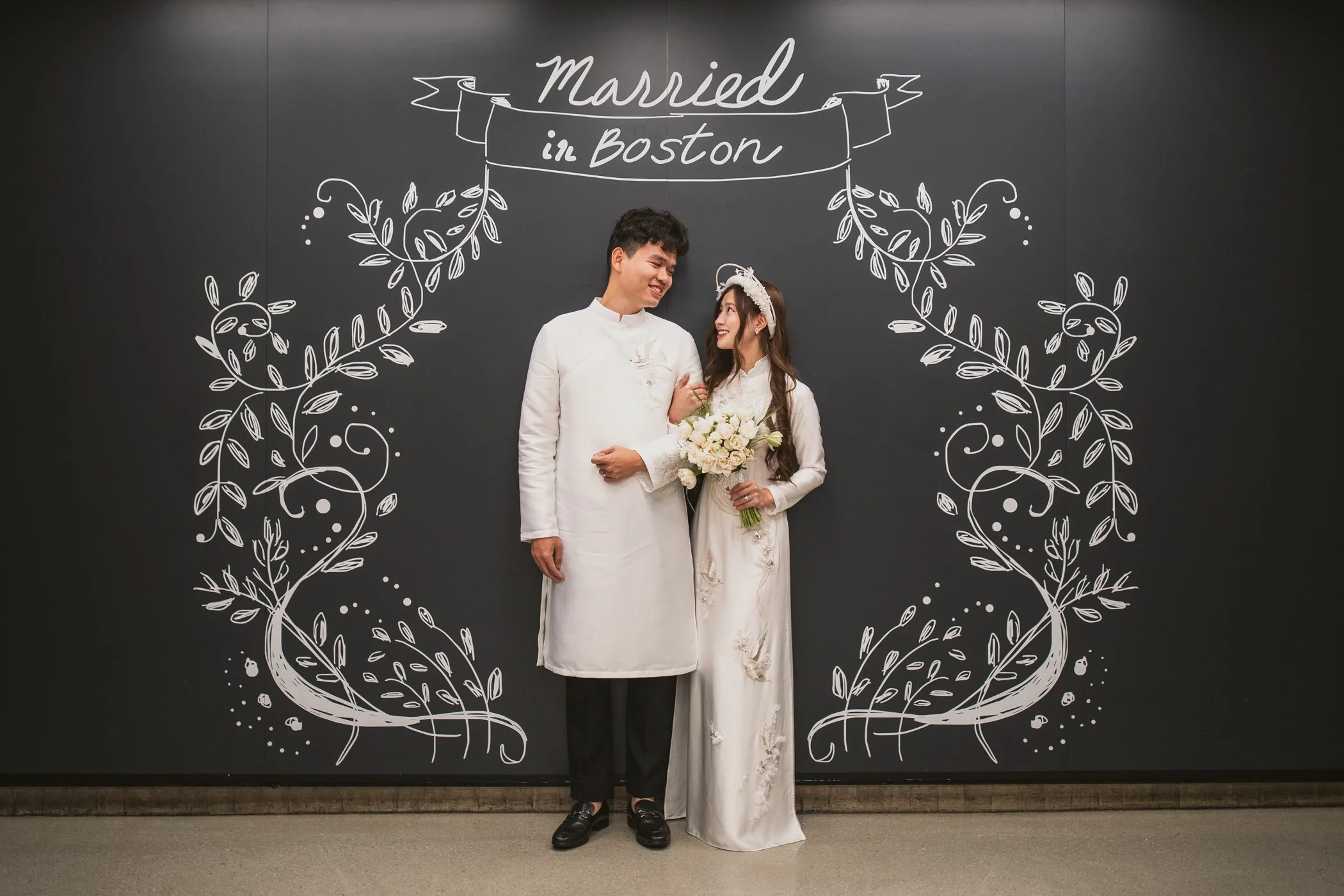
For Vietnamese weddings, the áo dài is the most recognized traditional outfit. It is elegant, graceful, and often worn by both the bride and groom. Brides may wear red, gold, white, pastel, or another color depending on tradition and personal style.
Some couples choose matching áo dài. Others coordinate colors between families or wedding party members. The result is often visually beautiful, especially during processions and family portraits.
The áo dài photographs wonderfully in motion. Walking, turning, holding hands, and standing in soft light can all show the shape and elegance of the outfit.
If you are planning to wear traditional Vietnamese attire, make sure the timeline includes enough time for getting dressed, family portraits, and any outfit changes before the next part of the day.
For the Bride:
1. Áo Dài (Áo Dài)
Silky, figure-hugging, with flowy pants.
Colors: Traditional = red/gold; modern = pastels, white, or even rainbow.
For the Groom:
Matching áo dài (usually in deep blue, black, or red) with a khan đống turban.
Or: A sharp Western suit.
A Modern Approach to Cultural Wedding Photography
Many couples today are blending traditions in a way that feels true to them. You may have a Chinese tea ceremony in the morning, a Western ceremony in the afternoon, Vietnamese attire for family portraits, and a modern reception in the evening. You may choose to honor certain customs while leaving others out.
That is completely okay.
Your wedding does not need to look exactly like anyone else’s. The most meaningful celebrations are often the ones that honor family while still feeling personal to the couple.
My approach is to photograph these traditions with care, patience, and respect. I want the images to feel elegant and natural, but also honest to the energy of the day. Some moments are emotional. Some are funny. Some are formal. Some are beautifully imperfect.
Together, they become the full story.
Final Thoughts
Chinese and Vietnamese wedding traditions are more than beautiful details. They are moments of connection between generations. They bring parents, grandparents, siblings, relatives, and friends into the story in a way that feels deeply personal.
Whether you are planning a full traditional wedding or simply including a few meaningful customs, these moments deserve to be documented with intention.
Years from now, the images will not only remind you what your wedding looked like. They will remind you how it felt to be surrounded by family, culture, laughter, blessings, and love.
Hi, I’m Yi.
I document Chinese, Vietnamese, and multicultural weddings with care, cultural awareness, and a story driven approach.